
Bring Me Empty Jars

On Preparing for What You Cannot Yet See
There is a particular kind of tiredness that comes not from doing the wrong thing but from doing the right thing for a long time without visible result. You have prayed. You have shown up. You have kept the marriage, kept the job, kept the faith, kept your mouth shut when you wanted to say something unforgivable. And nothing has moved. The tiredness is not failure. It is depletion, and it is one of the oldest conditions in Scripture.
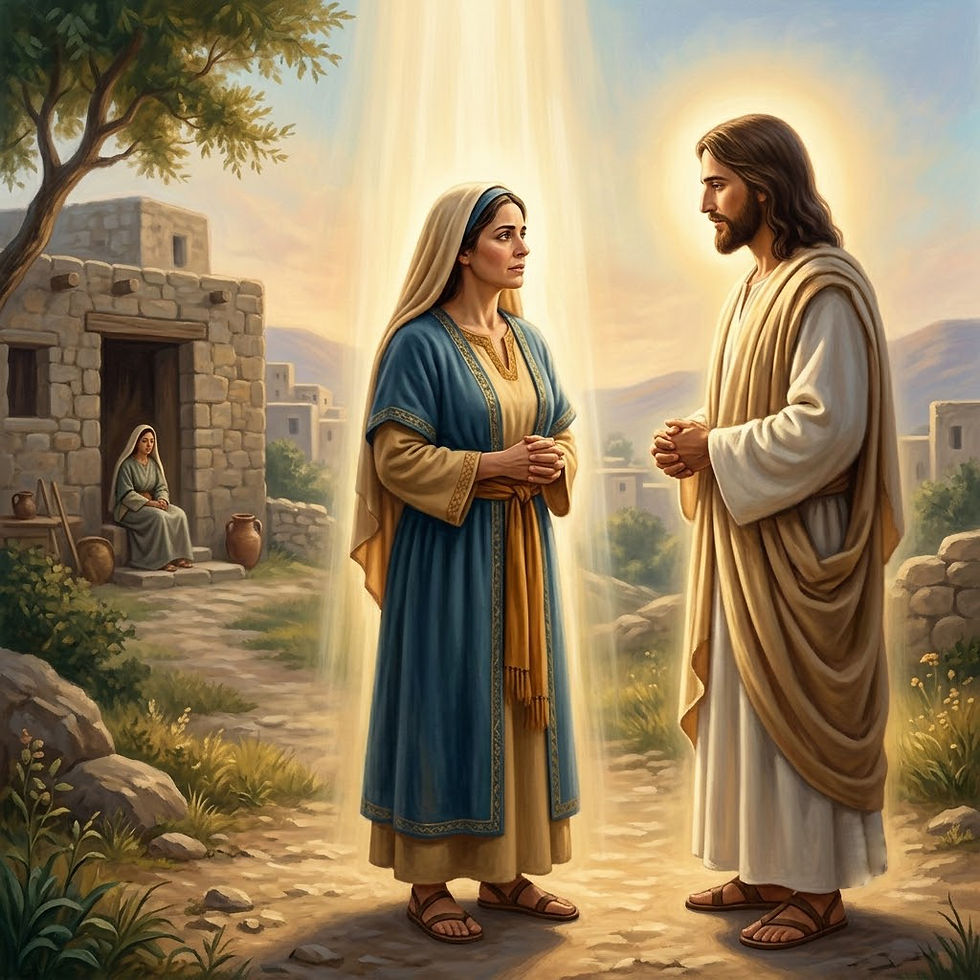
In 2 Kings 4, a woman arrives at the prophet Elisha in exactly that state. Her husband is dead. He was a godly man — the text is careful to say so, and it matters, because it forecloses the cheap explanation that she brought this on herself. She is in debt, and the creditor is coming to take her two sons as slaves. She has done nothing wrong, and she is about to lose everything.
Elisha asks her a strange question: What do you have in the house?
Almost nothing, she says. A small jar of oil.
And he tells her, "Go to your neighbors." Borrow jars. Empty ones. Not a few. Then shut the door behind you and start pouring.
The Jars Do Not Make the Oil
She does it. She and her sons close the door, and she begins pouring from that one small jar into the borrowed ones, and the oil keeps coming. It fills one, then another, then another. Finally, she says to her son, "Bring me another vessel" — and he answers, "There is not another."
And then the oil stopped.
Read that carefully, because it is the hinge of the whole story and it is easy to get backward. The oil did not stop because God ran out. It stopped because she ran out of room. The scarce thing in that house was never the provision. The scarce thing was the capacity to receive it.
This is what the jars are for. They do not manufacture anything. They generate no oil, contain no power, perform no work. A borrowed clay pot is the least impressive object in the story. Its only function is to be empty in the right place at the right time — and that turns out to be the difference between a woman keeping her sons and losing them.
Faith is very often like this. It is not the engine. It is the vessel. It does not produce what God gives; it makes room to receive it. And the room has to be made before the pouring starts, which means it has to be made before there is any evidence that anything is coming at all.
Empty is the Requirement
There is a second thing hidden in Elisha's instruction, and it is uncomfortable.
Empty jars.
You cannot pour oil into a full jar. Whatever is already in there has to come out first, and most of us are carrying a great deal. Certainty about how God ought to solve this.
Resentment we are still nursing because it feels like leverage. A version of ourselves we are protecting. The quiet conviction that we have earned an outcome.
Emptiness is not a spiritual achievement. It is just honesty about your actual condition — which is why depletion, the thing that feels like the end, is frequently the beginning. The woman did not come to Elisha with resources. She came with a dead husband, a debt, and a cup of oil. That was enough, because it was true.
What the Jars Look Like
Concretely, then. What does it mean to set out empty vessels?
Praying when you feel nothing. Not because feeling is the point, but because the habit is the jar. You are putting a container on the floor in a room where nothing is currently happening.
Reading Scripture before it clarifies. Some seasons you read and read, and it is dry as chalk. Set the jar down anyway.
Serving without being thanked. Teaching the four-year-olds. Setting up chairs. Sitting with the one difficult person nobody else sits with. These are not payments toward a result.
They are open containers.
Telling someone the truth about your life. The single hardest jar to set out, and often the one that gets filled first.
Asking. The widow had to go door to door and admit to her neighbors that she was destitute. There is no version of this story where she keeps her dignity intact and still gets the oil.
Notice that each of these is unimpressive on its own, and none of them causes anything. That is the point. If they caused something, they would be leverage, and we would be back to the ancient business of trying to make God act — which is not Christianity. It is commerce.
What This Does Not Promise
Here is where I want to be careful, because this is exactly where teaching like this usually goes wrong.
It does not follow that if you prepare hard enough, you will get the specific thing you are preparing for. That is not in the text, and it is not in the gospel. Hebrews 11 runs through the great roll call of faith — people who conquered kingdoms, shut the mouths of lions, received their dead back — and then, in one of the most bracing verses in Scripture, it says: and all of these, though commended through their faith, did not receive what was promised. Some were tortured. Some were sawn in two. Same faith. Different outcome.
So the jars are neither a mechanism nor a lever. When Elisha promised water to three desperate kings, he said something that ought to strip the leverage out of us permanently: this is a light thing in the eyes of the LORD. The constraint was never God's reluctance, nor the kings' intensity. God is not moved by how badly we want it. He is not waiting for our desperation to reach some threshold. He gives because he is generous.
Which leaves a distinction worth holding onto:
Ask boldly for what he has not promised. Healing. A prodigal's return. The marriage restored. Ask plainly, ask specifically, ask without embarrassment — and then leave it with him, because you do not know, and pretending you do is not faith. It is a way of avoiding him.
Prepare vessels for what he has promised. His presence. Forgiveness. His own life in you. Conformity to Christ. Grace sufficient for today. On these there is no ambiguity and no waiting list. These are the things the oil is actually made of.
The Oil is the Point
The last thing in the story is the smallest and the easiest to miss. She sells the oil, pays the debt, and lives on the rest. Her sons stay home. It is not a fortune. It is enough.
The jars were never the point. Nobody remembers the jars. The vessel does not matter except for what it holds, and the whole reason to set out an unimpressive clay container in an empty room with the door shut is that God is the kind of God who fills things.
So the question is not whether you have enough to bring. You almost certainly do not; the woman had a cup of oil and a creditor at the door. The question is only how much room you are willing to make, in the dark, before anything happens.
Bring the empty ones. Not a few.



Comments