
Blessed and Limping: What Jacob's Night of Wrestling Teaches Us About Holding On
- May 21
- 7 min read
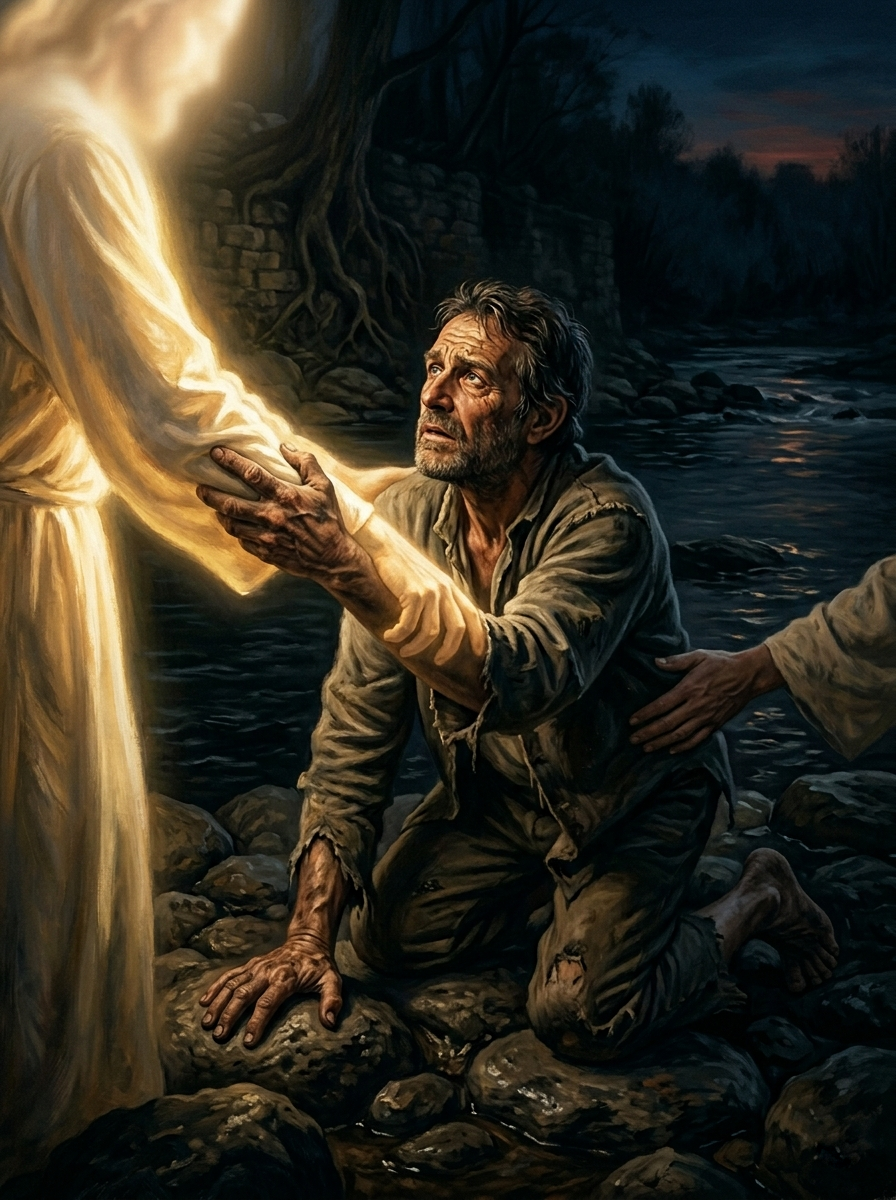
There is a kind of faith that does not look particularly triumphant from the outside. It is not the faith of the mountain-moving moment or the sudden, dramatic deliverance. It is quieter and costlier than that. It is the faith of a person who is hurting, confused, and still holding on—not because the answers have come, but because letting go has never truly been an option.
Genesis 32 gives us one of the most unusual and emotionally honest passages in all of Scripture, and it speaks directly to that kind of faith.
The Man Who Showed Up in the Dark
Jacob was alone. His family had crossed the ford of the Jabbok ahead of him, and the text simply tells us a man came and wrestled with him until the dawn began to break (Genesis 32:24). No introduction. No explanation. Just a man, a night, and a fight that lasted until morning.
Jacob had spent most of his life living up to his name. The name Jacob derives from the Hebrew "aqev," meaning heel—a reference to his birth narrative, when he emerged from the womb grasping his twin brother Esau's heel (Genesis 25:26). From that grip forward, Jacob's story is one of striving, scheming, and deceiving. He deceived his brother out of his birthright. He deceived his father and stole his brother's blessing. He ran and kept running and kept maneuvering. This was not a man anyone would hold up as a model of integrity.
And yet God came to him in the dark.
That is worth sitting with for a moment. God did not wait for Jacob to get his life in order before showing up. He did not appear after the repentance had been formalized or the character had been sufficiently reformed. He came to Jacob mid-mess, in the middle of the night, at the lowest and most isolated moment of the man's life.
When the One You're Wrestling Is the One You Need
The identity of the "man" in this passage has been debated across centuries of biblical scholarship. The text itself is deliberately layered. Jacob calls the place Peniel, meaning "face of God," and says plainly, "I have seen God face to face, yet my life has been spared" (Genesis 32:30). When the prophet Hosea revisits the event centuries later, he describes Jacob as striving "with the angel" (Hosea 12:4), which suggests a divine messenger or manifestation. Many theologians, particularly within the evangelical tradition, have identified the figure as a pre-incarnate appearance of Christ—what theologians call a theophany—pointing to the pattern throughout the Old Testament of the Son appearing in human form before the Incarnation.
Whatever the precise identification, the text is unambiguous on the essential point: Jacob was wrestling with God. Not against him in the sense of rebellion, but with him—in the middle of real questions, real pain, and a desperate refusal to disengage.
And this is the part that should be deeply encouraging to anyone who has ever found themselves arguing with heaven, crying out into what feels like silence, or holding on to a faith that no longer feels easy or tidy. The wrestling itself is not a sign of weak faith. In this passage, it is precisely the context in which God shows up, speaks, and blesses.
The Hip, the Honesty, and the New Name
What happens next is strange and significant. Verse 25 tells us that when the man saw he could not overpower Jacob, he touched Jacob's hip socket and dislocated it. One touch. The hip of a man who had wrestled through the entire night was wrenched out of joint with a single contact. This is not the touch of an equal—it is the touch of someone who could have ended the match at any moment and chose not to.
He let Jacob hold on.
Wrestling through most of the night in agonizing pain, barely able to stand, Jacob still did not release his grip. And in that posture — broken, exhausted, refusing to let go — he said something that deserves to be read slowly: "I will not let you go unless you bless me" (Genesis 32:26).
This is not arrogance. It is the honest, aching cry of a man who knows he has nothing left to offer except his refusal to stop clinging. And the response to that cry is a question: "What is your name?"
The man asking already knew the answer. The question was not for his benefit. It was for Jacob. What is your name? Say it out loud. Own it. Jacob. Deceiver. Supplanter. The one who grabbed and schemed and ran.
Honesty came before the blessing. Not performance, not polish, not a cleaned-up version of the story — just the unvarnished truth spoken aloud in the presence of God.
And the moment Jacob was honest, his name was changed.
"Your name will no longer be Jacob," the man told him. "It will be Israel, because you have struggled with God and with men and have prevailed" (Genesis 32:28). The name "Israel" carries the meaning of one who strives or wrestles with God—and the outcome attached to that name is not defeat but perseverance, not shame but a kind of hard-won honor.
Jacob's worst night became his defining moment. The very thing that marked his lowest point became the name of a nation.
Blessed and Still Limping
Here is where the story refuses to give us the ending we would write for ourselves.
Verse 31 says: "The sun rose above him as he crossed over Peniel, limping because of his hip."
He was blessed. He had seen God face to face and survived. His name had been changed. He carried forward something no one could take from him — a direct encounter with the living God, a covenant identity, a new name.
And he was limping.
He did not walk out of that riverbank healed. He walked out marked. Every step he took from that morning forward, the weakened hip reminded him of what had happened—not as a punishment, but as a permanent, embodied memory of the night he refused to let go and God refused to let go of him.
This is not the triumphant conclusion most of us want when we are suffering. We want the blessing and the healing. We want the limp to go away before we call it a victory. But Jacob's story suggests something more uncomfortable and, ultimately, more honest: the limp and the blessing can coexist. The pain and the grace can inhabit the same body, the same life, and the same morning.
For Jacob, the limp was a mercy. It kept him dependent. Every time that weakened leg bore his weight, he remembered that his strength was not the source of what he carried. God was. The wound that reminded him of his weakness was the same wound that kept him close to his strength.
The Thread That Runs Forward
It would be incomplete to look at this passage without noting where the story goes from here. Jacob — now Israel — became the father of twelve sons, and from those twelve sons came the twelve tribes of the nation that bore his new name. And from the line of Judah, one of those twelve, came a descendant who would carry the same pattern to its fullest expression.
Jesus of Nazareth, the Son of God, also entered into a night of agony and held on. He also emerged from that night bearing wounds he did not deserve. He also walked out scarred—the nail marks in his hands and feet were not erased in the Resurrection but carried forward into it (John 20:27). He was not blessed despite the wounds. He was glorified with them.
The scars of Christ are not relics of a defeat. They are the permanent testimony of a love that did not let go, offered to every person who — like Jacob — is wrestling in the dark, barely standing, asking for a blessing that has not yet come.
For Those Still in the Dark
If you are in a season of wrestling — if the questions are real and the pain is not abstract and the night has gone on longer than you thought you could endure — the story of Jacob has something specific to say to you.
Your struggle does not disqualify you. Jacob's did not disqualify him. It was, in fact, the crucible in which he was renamed.
Be honest about where you are. Not because honesty is the price of admission, but because honesty is where the encounter truly begins. What is your name? What is actually true about where you are right now? The God who already knows the answer is asking anyway—asking you to say it, to stop performing, and to stand before him in the truth of your condition.
And do not let go. Not because holding on will force God's hand, but because the whole night—in Jacob's story and perhaps in yours—the question was never whether you could hold on to God. The question was whether you would notice that he was already holding on to you.
The sun will rise. It rose for Jacob. It rose on the third morning for Christ. It will rise for you.
And if you walk into that morning limping, remember: the limp is not proof that you lost. It may be the very thing that keeps you remembering who carried you through.
"So Jacob called the place Peniel, saying, 'It is because I saw God face to face, and yet my life was spared.'" — Genesis 32:30
"For I am convinced that neither death nor life, neither angels nor demons, neither the present nor the future, nor any powers, neither height nor depth, nor anything else in all creation, will be able to separate us from the love of God that is in Christ Jesus our Lord." — Romans 8:38–39



Comments